
Occupational Therapy
Our occupational therapists help children develop daily living, fine motor, and sensory skills to support school success and independence.

Dr. Prabhakar Pradhan
Chief Occupational Therapist
Professional Certifications
- Pediatric Occupational Therapist
- Certified Sensory Integration Therapist, by USC/WPS
- Certified in TalkTools Oral- Placement Therapy (OPT Level 1 and 2)
- Certified in Handwriting without Tears (HWT) Program Level 1
- Cog-Med Coach, Pearson, India
- Certified in Rhythmic Movement Training International (RMTi Level 1 and 2)
- Trained in Neuro Developmental Therapy for Children
- Life Member All India Occupational Therapy Association (AIOTA: L-5222/18)
He is a highly experienced Pediatric Occupational Therapist with 14+ years of expertise in assessing and treating children with Autism Spectrum Disorder (ASD), ADHD, Developmental Delays, Learning Disabilities, Down Syndrome, and other neurodevelopmental conditions. He is dedicated to providing evidence-based, child-centred therapy, working closely with families to help every child develop essential skills, achieve developmental milestones, and reach their fullest potential.
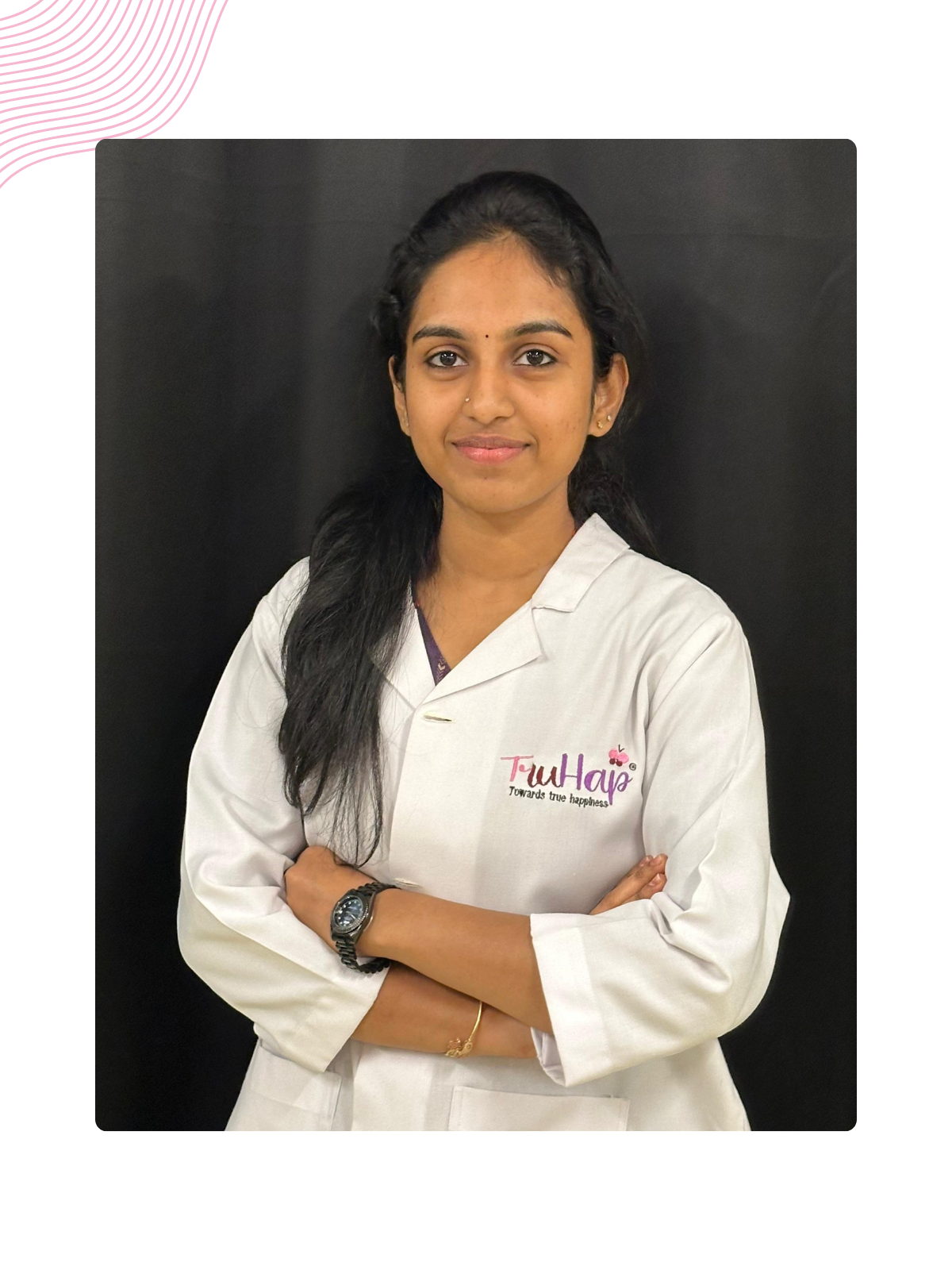
Aparaajitha. G
Occupational Therapist
(AIOTA) Registration Number: L-8598/2026
Experience of 1.5yrs
She specializes in occupational therapy. She provides personalized, evidence-based interventions to help children develop fine motor, sensory, and daily living skills for greater independence.
Our Occupational Therapy Services
Comprehensive and tailored to each child’s unique developmental needs.
Fine Motor Skills
Developing hand strength, fine motor skills, and coordination for writing, drawing, and everyday activities.
- Hand Strengthening
- Finger Dexterity
- Bilateral Coordination
- Pincer Grasp
Gross Motor Skills
Improving balance, coordination, and movement skills for physical activities and sports participation.
- Balance Training
- Core Strength
- Coordination
- Body Awareness
Sensory Integration
Helping children process and respond appropriately to sensory input from their environment.
- Sensory Processing
- Therapeutic Activities
- Environmental Modifications
- Sensory Diet
School Readiness
Preparing children for academic success through essential pre-writing and classroom readiness skills.
- Pre-Writing Skills
- Visual Perceptual Skills
- Attention Training
- Classroom Behaviors
Social Skills
Building social interaction skills and emotional regulation to support positive peer relationships.
- Social Participation
- Emotional Regulation
- Communication Skills
- Play Skills
Daily Living Skills
Teaching age appropriate independence in self-care skills and daily household activities.
- Self Care Skills
- Feeding Skills
- Dressing Skills
- Hygiene Routines
Motor & Functional Milestones
Understanding typical developmental milestones helps identify when your child may need early support.
1-2 Years
- Walks independently
- Builds tower of 4 blocks
- Scribbles with crayon
- Feeds self with spoon
2-3 Years
- Runs and jumps
- Builds tower of 8 blocks
- Copies circle
- Uses fork and spoon
3-4 Years
- Rides tricycle
- Cuts with scissors
- Draws person with 3 parts
- Buttons large buttons
4-5 Years
- Hops on one foot
- Cuts on line
- Copies triangle
- Ties shoes with help
5-6 Years
- Skips smoothly
- Cuts complex shapes
- Prints name
- Dresses independently
6+ Years
- Complex motor patterns
- Neat handwriting
- Complex drawings
- Advanced self-care
Conditions We Help
Our occupational therapists treat a wide range of developmental challenges.
Autism Spectrum Disorders
Supporting sensory processing, fine motor development, and daily living skills for children with autism.
ADHD
Supporting children with attention difficulties to enhance focus, organization, and self-regulation skills for better learning and daily life.
Developmental Delays
Helping children with delays in motor skills, cognitive development, or daily living skills build independence and confidence.
Sensory Processing Disorder
Supporting children with sensory processing difficulties to better interpret and respond to information from their environment.
Fine Motor Delays
Guiding children to enhance fine motor abilities, handwriting, and control over small objects for daily success.
Learning Disabilities
Boosting academic success with visual perceptual training. Improving focus, organization, and learning skills.
Frequently Asked Questions
Occupational therapy helps children develop the skills they need for daily activities like playing, learning, and self-care. OT focuses on fine motor skills, sensory processing, visual perception, and independence in daily tasks.
Signs include difficulty with handwriting, clumsiness, sensory sensitivities, delayed motor milestones, difficulty with self-care tasks, or challenges with attention and organization. An OT evaluation can determine if services would be beneficial.
OT sessions are play-based and engaging, incorporating activities that target your child’s specific goals. This might include games to improve hand strength, sensory activities, craft projects, or practicing daily living skills.
Children can benefit from OT services from infancy through adolescence. Early intervention (starting as early as possible) often leads to better outcomes, but OT can be helpful at any age.
The duration varies based on individual needs and goals. Some children may need a few months of intervention, while others benefit from longer-term support. Progress is regularly monitored and treatment plans adjusted accordingly.
Sensory integration therapy helps children who have difficulty processing sensory information. It uses structured activities to help the nervous system respond more effectively to sensory input, improving function and behavior.
Yes, OT is very effective for handwriting difficulties. We address underlying skills like hand strength, finger dexterity, visual perception, and posture that are necessary for legible, efficient handwriting.
Yes, we collaborate with schools to support your child’s success. We can provide recommendations for classroom accommodations, adaptive equipment, and strategies that teachers can use to support your child’s learning.
The first visit includes an evaluation where the therapist will assess your child’s skills, observe them performing various tasks, and discuss your concerns and goals. This information is used to develop an individualized treatment plan.
Your OT will provide home activities and strategies to practice between sessions. This might include specific exercises, environmental modifications, or incorporating skill practice into daily routines and play activities.
Quick Links
Locations
Sathi Reddy complex, Hyderguda X Roads, Attapur, Pillar # 143, Hyderabad, Telangana, 500048.
Shalivahana Nagar, Friends Colony, Dilsukhnagar, Hyderabad, Telangana 500036